

If we liken machine vision to the "vision system" of a smart factory, then the industrial lens is its most sophisticated "lens." It directly determines whether the machine "see" clearly, accurately, and stably. From simple inspections on the production line to guiding machines to perform complex recognition tasks, its development has consistently revolved around optical design, coating technology, and seamless integration with sensors, driving imaging capabilities to ever-break through limitations.
Currently, from micrometer-level chips to precision-assembled automobiles, modern manufacturing's demanding requirements for "vision" are ubiquitous. According to industry research, the machine vision market is expanding at a compound annual growth rate exceeding 8%. Its core driving force is the industry's relentless pursuit of superior imaging performance: lenses need to remain stable in various environments, reproduce reality with near-distortion-free accuracy, and provide sufficient resolution to detect minute imperfections. This is not only a technological race but also the cornerstone of production capacity and quality.
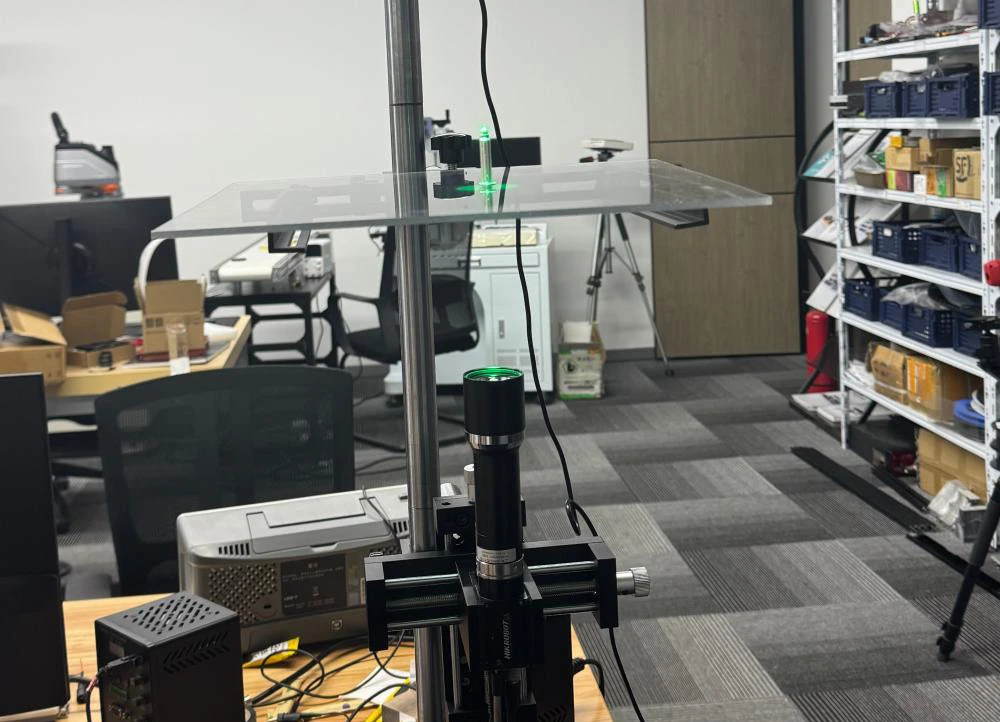
Why are industrial lenses so important in modern machine vision?
On automated production lines, the machines' "eyes" must see exactly the same image every time, without the slightest distortion. This is completely different from a camera lens. Industrial lenses are designed to work with machine inspection equipment: they are vibration-resistant and have precise focusing capabilities, withstand temperature changes, and guarantee stable imaging 24/7.
Industrial lenses are meticulously designed to ensure that the internal lens elements remain perfectly still; the lens surface captures the clearest and most realistic light under standard lighting conditions.
Precision is its lifeline. In inspection, even an imaging error of 0.01 millimeters can lead to misjudgment and losses. Therefore, top-tier industrial lenses must achieve the ultimate in low distortion, high resolution, and superior image fidelity (MTF) to ensure that the machine images the absolutely accurate size and shape.
This pursuit of precision has no end. As camera sensor pixels leap from 5 million to 25 million or even higher, it's like giving machines a more sensitive "retina," requiring a more powerful "lens"-that is, a higher-resolution industrial lens. This is precisely the core driving force behind its continuous technological innovation: the desire to see a more subtle world.
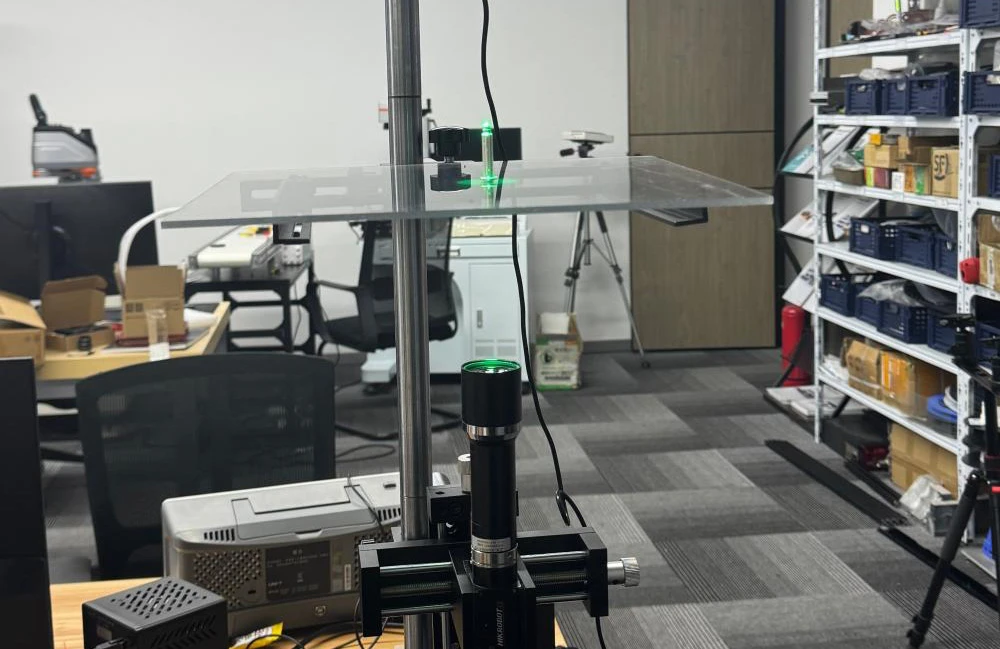
When selecting industrial lenses, which optical parameters are most important?
Choosing an industrial lens for an automation system is essentially matching the most suitable "lens" to the machine's "eyes." The following core optical parameters directly determine image quality and mission success:
1. Precise Sensor Pixel Matching:
The lens resolution must match the pixel size of the camera sensor. For example, if the sensor pixel size is 2.4µm, the lens resolution needs to be greater than 120 line pairs/mm (lp/mm). If mismatched, the image will be blurry, and the sensor's high pixel count advantage will be negated.
2. Importance of Precision Measurement:
Lens distortion must be strictly suppressed, typically required to be below 1%. In precision scenarios such as measuring PCB linewidth or battery electrode dimensions, distortion exceeding this limit will directly lead to measurement errors, affecting product quality assessment.
3. Ensuring the Target Remains Sharp:
Working distance is the distance from the lens to the object, while depth of field is the range of depth that maintains a sharp image. When imaging uneven 3D surfaces or objects with varying heights, sufficient depth of field ensures the entire target remains in focus, avoiding localized blurring.
4. Ensure Consistent Inspection Quality
For high-precision dimensional measurements, telecentric lenses are preferred. Their unique feature is that even with slight object positional shifts, their size in the image remains constant, thus completely eliminating parallax errors and ensuring absolutely reliable measurement results.
5. Enhance Contrast and Signal-to-Noise Ratio
Under complex lighting conditions such as polarized light or high-intensity LED illumination, high-quality multi-layer anti-reflective coatings are crucial. They effectively reduce stray light interference, improve image contrast and signal-to-noise ratio, making defects or details more prominent and easier to identify in the image.
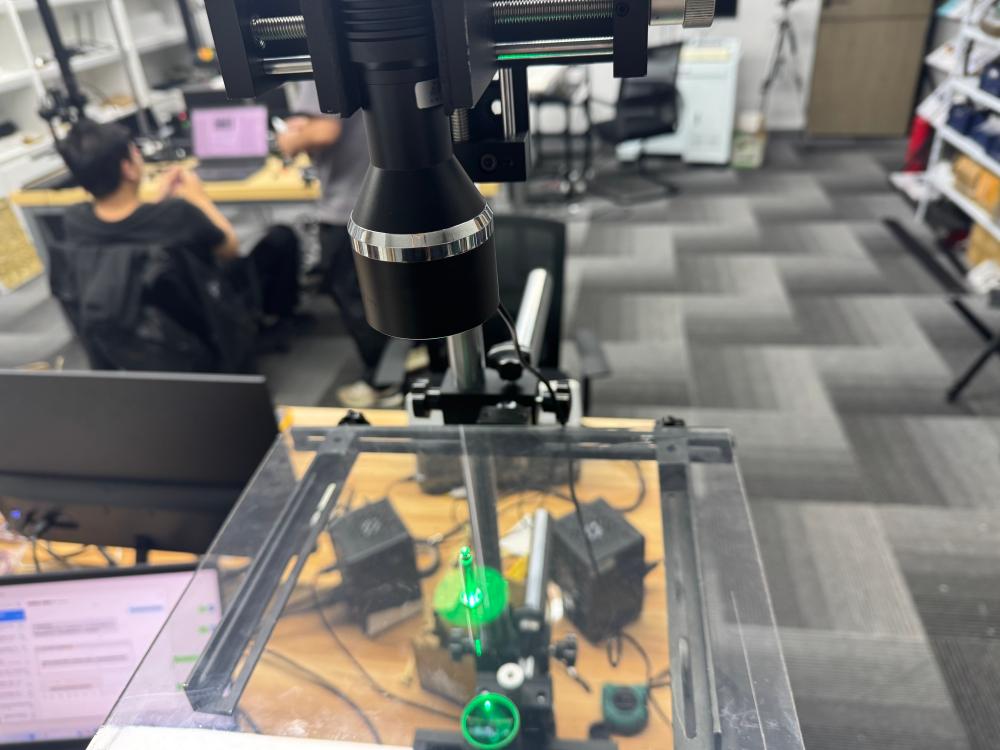
Comparison of Lens Types in Machine Vision
|
Lens Types |
Key Features |
Optimal Application Scenarios |
|
Standard Industrial Lens |
Balanced resolution, moderate distortion |
General Inspection, Barcode Reading |
|
High-Resolution Industrial Lenses |
Supports >120 lp/mm resolution, low aberrations |
Electronic Inspection, Precision Measurement |
|
Telecentric Lenses |
Constant magnification, minimal distortion |
Metrology, Dimensional Inspection |
|
Macro Industrial Lenses |
Optimized for close-up focusing |
Surface Defect Detection |
|
Ruggedized Lenses |
Shock/vibration resistant |
Robotics, Factory Automation |
How does sensor format affect the performance of industrial lenses?
When selecting industrial lenses, they must be evaluated and matched with the camera sensor as a coupled system. The main constraints stem from two core parameters: sensor physical size and pixel size.
1. Sensor Size Matching
Industrial lens designs must be compatible with specific sensor formats (e.g., 1/2.3 inch, 2/3 inch, 1 inch, etc.). If the lens image circle is smaller than the sensor diagonal, it will lead to severe vignetting (peripheral illumination attenuation) and loss of effective resolution. For example, mismatching a small-sized lens to a 1.1-inch large-area sensor will result in uneven illumination at the image edges and a significant decrease in sharpness. Therefore, ensuring that the lens's nominal image circle completely covers the sensor surface is a primary condition for obtaining a uniform and usable image.
2. Pixel Size Driven
As sensor technology evolves towards smaller pixel pitches (e.g., from 2.5 micrometers to 1.6 micrometers), the requirements for lens optical resolution increase exponentially. Lenses must maintain excellent modulation transfer function (MTF) performance at higher spatial frequencies (corresponding to finer details). Especially near the Nyquist frequency of the sensor, the lens needs to maintain a sufficiently high contrast transmission capability to ensure that each pixel receives effective information, avoiding aliasing and wasted effective pixels due to insufficient optical resolution.
3. Application-Oriented Approach
This matching logic is particularly evident in high-precision fields such as semiconductor inspection. When measurement accuracy requirements reach the micrometer level, the ultimate resolution of the entire imaging chain is often determined by the weakest link in the "lens-sensor" combination. Therefore, when selecting a lens, it is necessary not only to meet the sensor format but also to calibrate its MTF curve in the corresponding frequency band based on the actual pixel size and the highest spatial frequency required by the application, ensuring that the optical system can support the required measurement accuracy.
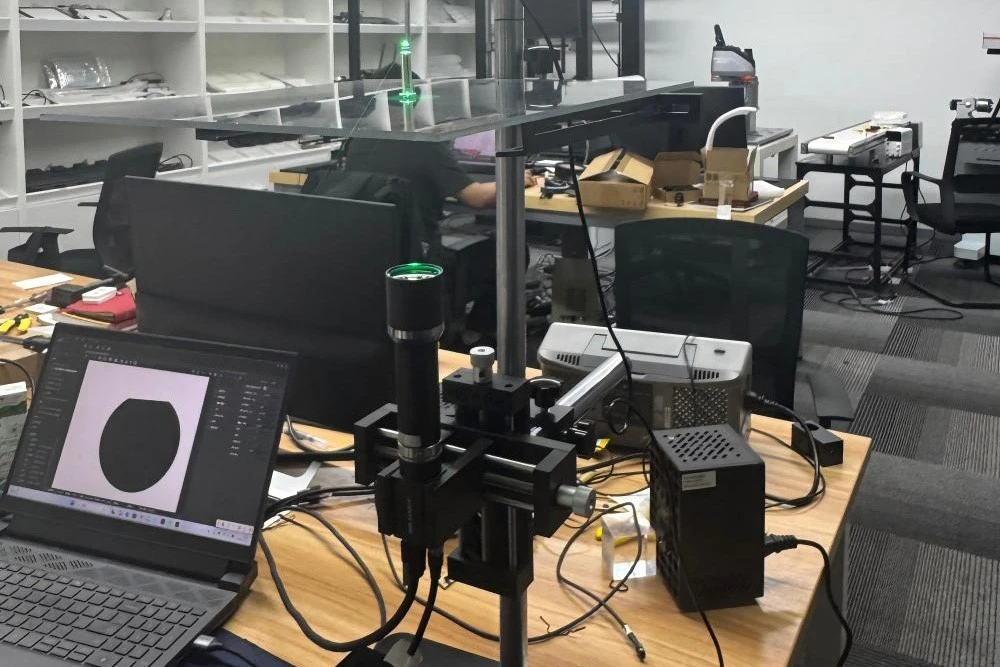
Sensor pixel size and recommended optical resolution
|
Pixel size (micrometers) |
Required lens resolution (line to millimeter) |
application |
|
3.45 µm |
80–100 lp/mm |
标准检测 |
|
2.4 µm |
120 lp/mm |
高精度电子器件 |
|
1.6 µm |
160 lp/mm |
半导体与微加工 |
|
<1.5 µm |
>180 lp/mm |
先进计量技术 |
What are some common malfunctions of industrial lenses during production?
In actual production environments, industrial lenses often face a variety of complex operating conditions, and their imaging quality and inspection stability are affected by multiple factors. Common problems include mechanical vibration, uneven illumination, surface reflection interference, and limited depth of field. For example, in the inspection of highly reflective metal surfaces, strong reflected light can easily cause glare, drastically reducing image contrast and exceeding the lens's dynamic range, making it difficult to accurately identify edges and details.
Furthermore, dust deposits, oil stains, or minor scratches on the lens's front glass can reduce image sharpness by up to approximately 15%, directly affecting the accuracy of defect detection and the stability of the algorithm. In workshop environments with significant temperature fluctuations, the internal structure of non-industrial ruggedized lenses may experience slight focus shifts due to thermal expansion and contraction, leading to minor drift in inspection results over long-term operation.
When applying industrial lenses to automated production systems, their compatibility with different types of illumination (coaxial illumination, dark-field illumination, telecentric illumination) must also be considered. Appropriate optical matching determines image contrast, reflection control capabilities, and edge enhancement effects. Excellent optical design should strike a balance between image sharpness, light throughput, mechanical strength, and environmental adaptability to ensure that the lens maintains stable and reliable performance under high-speed testing conditions.
Common Industrial Lens Problems and Technical Reasons
|
Issue |
Root Cause |
Prevention |
|
Image blur |
Insufficient resolution, mis-matched pixel size |
Match lens to sensor specs |
|
Glare & hotspots |
Reflective surfaces |
Use polarization or diffused lighting |
|
Vibration misalignment |
Weak mechanical housing |
Use ruggedized industrial lenses |
|
Uneven illumination |
Lens-image circle mismatch |
Select correct sensor format |
Challenges and Solutions
Challenges:
In actual production environments, improper selection of industrial lenses often leads to fluctuations in image quality, such as insufficient edge contrast, unstable dimensional measurements, and difficulty in capturing minute defects under varying lighting conditions. These problems not only affect inspection reliability but also increase the risk of false positives and false negatives.
Solutions:
To improve imaging stability, companies should establish a systematic optical evaluation process. First, match a suitable lens to the sensor format and pixel size, and select industrial-grade optics with the target MTF (Mean Transmission Target) specification. Configure specialized illumination, such as polarized light, coaxial light, or diffused light, for different material reflection characteristics. Use shock-resistant lens mounts to reduce shake interference during high-speed imaging and perform regular lens cleaning and optical calibration. By optimizing the synergy between the lens, sensor, and illumination, inspection accuracy can be significantly improved, stability enhanced, and the false positive rate effectively reduced.


