

Under the wave of rapid industrial development, automation is accelerating into all walks of life. From traditional manufacturing to high-end technology, the production link of "quality inspection" is also undergoing profound changes. As an important branch of machine vision, 3D cameras are relying on their powerful 3D algorithms to output high-frame rate image data in real time, gradually replacing manual and 2D inspection methods, and ushering in a more efficient, smarter and more accurate era of quality inspection.
So, how does 3D camera subvert the traditional quality inspection mode? What practical application value can it bring in automated production? The following will answer in detail.
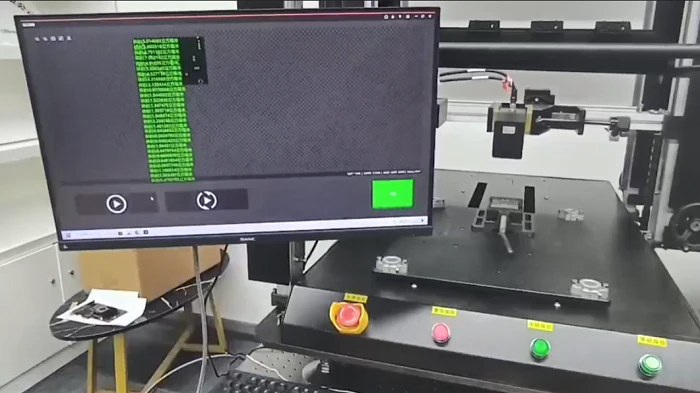
1. 3D recognition accurately captures defects
Traditional 2D cameras can only obtain two-dimensional image information of objects, and are powerless for defects in spatial dimensions such as height, bending, warping, and depression. 3D cameras can capture the complete three-dimensional structure of objects through structured light, laser triangulation or binocular stereo vision, and accurately obtain data such as height, volume, and surface lenqui.
This three-dimensional recognition capability gives it an irreplaceable advantage in detecting solder joint protrusions, battery bulges, package flatness, PCB part offsets, etc., greatly improving the accuracy and reliability of quality inspection.
2. Meet the rhythm requirements of automated production lines
Modern 3D camera products have sub-millimeter depth accuracy and high-speed data acquisition capabilities, and can complete real-time image acquisition and processing on high-speed production lines, fully meeting the rhythm requirements of continuous and mass production. Combined with industrial robots or motion platforms, 3D vision systems can achieve multi-angle detection of complex products, and work with automatic rejection and alarm systems to achieve true "unmanned quality inspection" closed-loop control.
3. Intelligent algorithms adapt to more complex working conditions
Most of today's 3D camera products have integrated AI algorithm platforms to support deep learning and image recognition technology. Even in the face of detection problems such as lighting changes, surface reflections, and special-shaped products, 3D cameras can still make accurate judgments through intelligent algorithms, greatly improving the system's ability to produce clear images.
3D cameras have gradually become a mainstream application trend in industries such as consumer electronics, automotive parts, new energy, and video packaging.
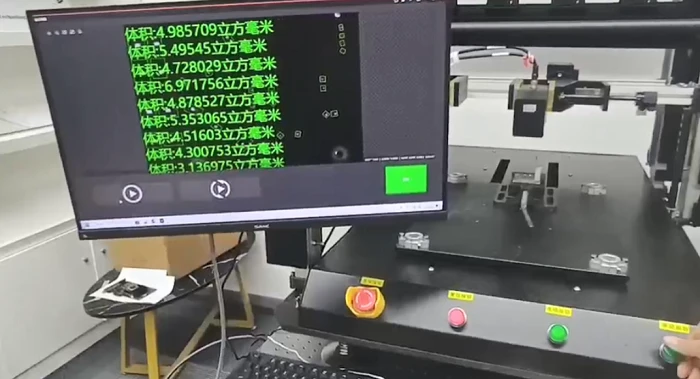
4. Assist in digital quality management
3D cameras not only provide real-time quality inspection results, but also synchronously output multi-dimensional information such as depth maps, micron-level point cloud data, depth maps and brightness map data, providing a basis for subsequent big data analysis and quality traceability. This "data + visualization" detection method is also an important part of modern intelligent manufacturing.
Driven by the era of automation, 3D cameras are gradually becoming a core tool for improving the quality inspection level of production lines. In the future, with the continuous upgrading of technology and the gradual optimization of costs, 3D vision will be realized in more scenarios, helping automation companies move towards a more efficient, intelligent and accurate quality control model.
Zhixiang Vision focuses on the research and development and application integration of industrial vision products, providing one-stop vision solutions including 3D cameras, industrial lenses, controllers, and algorithm platforms. If you have more industrial vision products you want to consult, you can send us an email and we will answer you as soon as possible.


