

With the continuous advancement of intelligent manufacturing, how to achieve efficient control of product quality has become a key factor in improving the core competitiveness of manufacturing companies. Although traditional machine vision systems have been widely used in industrial inspection, there are still many limitations that cannot be solved in complex defect scenarios. Now, with the important research on deep learning visual algorithms for 3D cameras and smart cameras, with powerful image recognition and learning capabilities, the problem of defect detection is gradually being solved.
The following will comprehensively analyze the application value of deep learning visual algorithms in defect detection from multiple aspects such as the limitations of traditional detection, the technical advantages of deep learning, industry application cases, and future development trends.
1. Limitations of traditional visual algorithms
In traditional machine vision systems, most of the detection algorithms are manual code settings and fixed rules, such as edge detection, color segmentation, etc. Although these algorithms can achieve good recognition effects in images with clear structures and obvious contrast, they are obviously insufficient in the following scenarios:
The defect morphology is complex, the edges are blurred, and the position is random;
Uneven lighting or environmental reflections lead to changes in image contrast;
The product surface texture is diverse, and it is easy to misidentify normal processes as defects;
New products are frequently replaced, and detection rules and templates need to be constantly adjusted.
In the above situations, traditional algorithms often cannot achieve "universal recognition" and need to constantly rely on manual optimization of equipment, which has high development costs and difficult maintenance. The detection consistency is poor and it is difficult to support the needs of large-scale automated production lines.
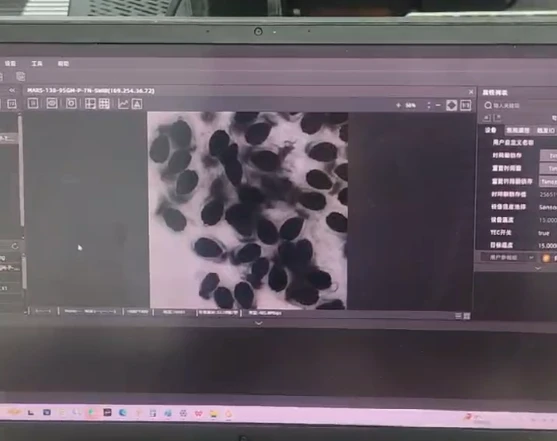
2. Deep learning empowers intelligent defect detection
Deep learning visual algorithms, especially those developed based on embedded platforms, with built-in VM algorithms and flexible and diverse accessories, have completely changed the traditional detection mode. Unlike traditional algorithms, deep learning can automatically extract key features by training a large amount of image data to achieve more accurate and stable defect recognition.
Its significant advantages include:
No need for manual feature design: The system can automatically extract the most representative defect features from the image to improve the recognition accuracy.
High fault tolerance and robustness: It has strong adaptability to lighting changes, background interference, product placement angles, etc.
Strong generalization ability: It can cope with multiple types of products and diverse defects, and can be deployed in batches after only one training.
Clear visualization results: With the help of technologies such as heat maps and segmentation maps, the detection results are intuitively visible, which is convenient for traceability and optimization.
In addition, deep learning can also cooperate with task models such as image classification, target detection, and semantic segmentation to achieve richer detection capabilities, such as locating defect areas, determining defect types, and even predicting defect trends.
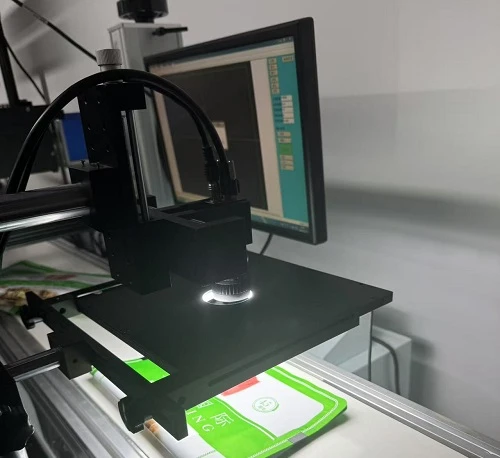
3. Industry application cases: solder joint detection in electronic manufacturing
Take an electronic manufacturing company we recently served as an example: this customer mainly conducts full inspections on the solder joints of PCB boards on the production line, including multiple defect types such as leaking solder joints, short circuits, and missing components.
At the beginning, the traditional visual solution was used. Due to the small size of the solder joints and strong reflection, the detection accuracy could not meet the shipment requirements, and the false detection rate was relatively high. The technicians used deep learning image classification and segmentation technology to design and deploy a set of customized detection models:
Use high-resolution industrial cameras with multi-angle light sources to collect images;
Build a multi-sample solder joint defect database;
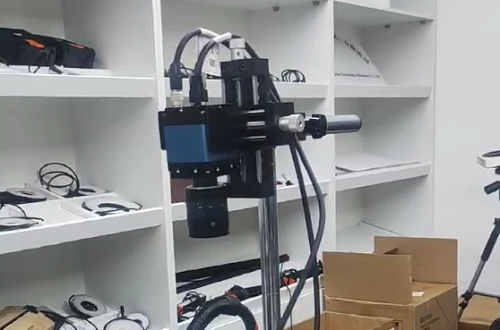
With flexible and diverse accessories and modular components, it can adapt to changing application needs.
Finally, the production line production accuracy is improved, the false detection rate is reduced, and the customer's requirements for production quality are met. Later, the project successfully implemented edge computing deployment, and the detection speed was also improved, fully meeting the customer's production efficiency requirements.
4. Widely applicable industries, promoting the upgrading of intelligent manufacturing
Deep learning visual inspection is not only applicable to electronic manufacturing, but also in the following industries:
Automobile manufacturing: headlights, welds, surface scratches and defects of parts;
Metal processing: aluminum plate, steel coil surface inspection, cracks, foreign body identification;
Glass and ceramics: transparent material defect identification such as cracks, bubbles, black spots;
Packaging and printing: detection of problems such as missing printing, blurred barcodes, and broken seals;
New energy batteries: detection of minor defects such as scratches on poles, broken edges, short-circuit foreign bodies.
Whether it is standardized batch production or small batch diversified production mode, deep learning can provide highly adaptable solutions, reduce manual dependence, and improve yield rate and brand competitiveness.
As a professional solution provider in the field of machine vision, Zhixiang Shijue has accumulated rich experience in deep learning visual inspection. We will continue to expand the algorithm platform, optimize hardware compatibility, create more landing scenarios around core industries such as electronics, automobiles, medical care, and semiconductors, and provide customers with customized intelligent inspection systems.
If your company is also facing the challenge of defect detection, welcome to contact Zhixiang Shijue. We will provide you with professional, efficient and feasible intelligent vision solutions!


