

Driven by the wave of intelligent manufacturing, industrial vision technology continues to break through and innovate. Traditional industrial cameras can hardly meet the manufacturing industry's needs for intelligent identification, autonomous decision-making and rapid deployment. With the advantages of image acquisition, analysis and output, smart cameras are rapidly penetrating into various industrial applications. The following will combine market trends and actual application scenarios to deeply explore the five major application trends of smart cameras in manufacturing sites to help companies grasp the future development direction.
1. Edge intelligent processing
With the acceleration of production progress and the increase in system complexity, the traditional industrial camera + industrial computer solution has been difficult to cope with high-frequency image processing needs. Smart cameras use built-in embedded processors to achieve instant edge analysis, greatly shortening the time from image capture to result output.
In the fields of 3C electronics, automotive parts assembly, express sorting, etc., edge intelligence can achieve millisecond-level defect detection and positioning tracking, which not only significantly improves detection efficiency, but also reduces the difficulty of system operation and maintenance, and effectively reduces total cost.
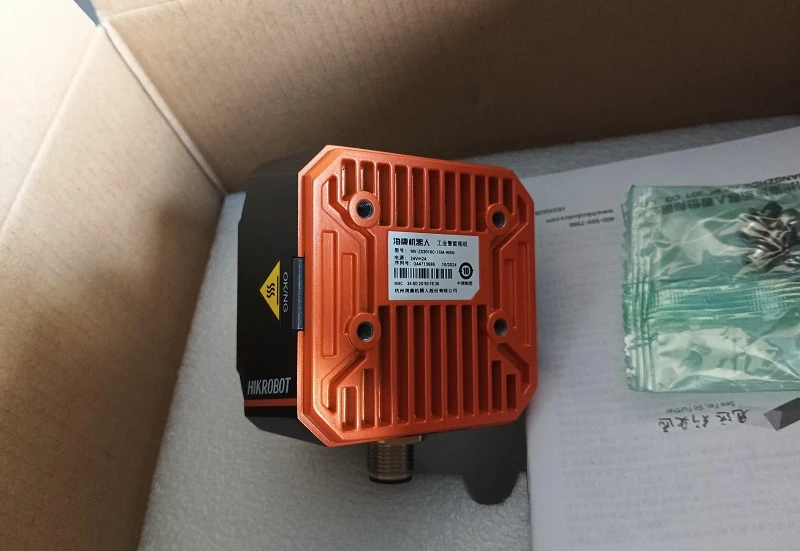
2. AI algorithm integration promotes complex recognition
Smart cameras are equipped with deep learning recognition algorithms, supporting online training, image classification, defect judgment, character recognition and other tasks, breaking the traditional rule vision's dependence on precise templates. For example, in the food packaging industry, smart cameras can accurately identify special-shaped labels, deformed inkjet codes, and defective seals; in the field of metal manufacturing, AI cameras can adapt to complex features such as reflective interference and irregular solder joints, greatly improving the recognition accuracy. Compared with traditional solutions, AI cameras have the learning characteristics of "more accurate with use", which is particularly suitable for smart manufacturing scenarios with large batch changes and frequent process changes.
3. Modular integration improves production efficiency
The current development of smart cameras has tended to be highly modular and standardized, and is deeply compatible with industrial automation equipment in terms of physical interfaces, electrical connections, and software protocols, significantly shortening the deployment cycle. For example, in production line upgrade projects, smart cameras can be quickly integrated into existing robot workstations, conveyor lines, and automatic loading and unloading production lines to achieve visual positioning, guidance, and detection functions. The deployment cycle is compressed from several weeks of traditional solutions to several days, minimizing production line downtime.
The secondary development and visual configuration interface based on SDK also lowers the threshold for engineering and technical personnel to use, providing convenience for enterprises to quickly pilot and batch replicate.
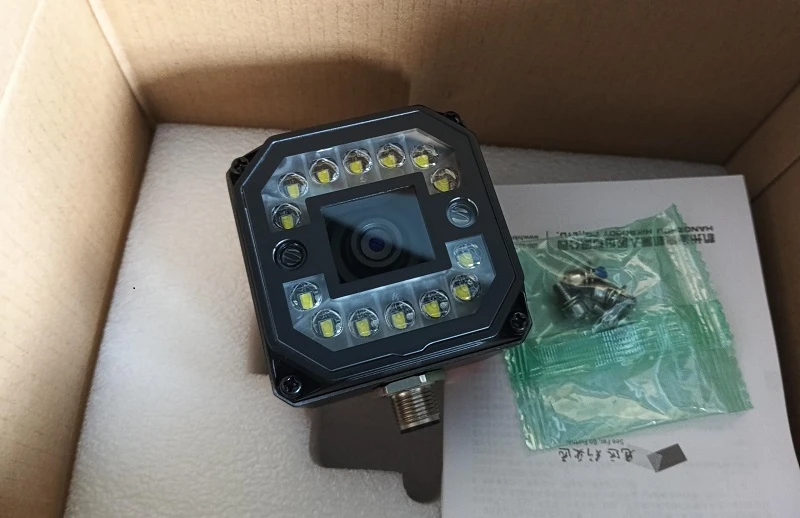
4. Environmental adaptability continues to increase
Manufacturing sites are often accompanied by high temperature, high humidity, high vibration and strong interference electromagnetic environment, which puts higher requirements on the stability of visual equipment. The new generation of smart cameras generally adopts high protection level structure, wide temperature design, anti-interference filter system and sealed heat dissipation system, which can adapt to various harsh production environments from welding workshops, high-speed stamping production lines to food clear packaging workshops.
In the assembly production workshop of automobiles, smart cameras need to face welding sparks, high-brightness arc interference and dust environment. By configuring multiple filters and algorithm optimization, the equipment can still stably identify solder joint defects and ensure the closed loop of quality control.
5. Data interconnection enables manufacturing intelligent decision-making
Smart cameras are not only detection tools, but also data collection and edge analysis nodes. Through deep docking with multiple systems, smart cameras can integrate detection data with production information in a closed loop to realize equipment status monitoring, abnormal warning, traceability management and other functions. Some smart cameras also support cloud synchronization and remote maintenance, realizing online upgrades of software algorithms and remote debugging of data. With the continuous upgrading of the AI functions of smart cameras, this type of data linkage will become the core support for promoting the intelligence of industrial decision-making.
On the daily chemical filling production line, the smart camera detects the liquid level of the bottle mouth in real time and links with the ERP system. If a deviation is found, the filling pressure and speed can be automatically adjusted, thus realizing a closed-loop system of visual and control production.
With the increase in labor costs, the improvement of product accuracy and the changing needs of production, as well as the improvement of production efficiency, smart cameras have been upgraded from visual terminals to the central nodes of intelligent manufacturing. Among them, continuous breakthroughs in AI recognition, system integration, data interconnection and environmental stability make it an indispensable core equipment for future factories. If you want to know more about industrial camera products or industry cases, please visit our official website or contact us for more product knowledge.


