

In machine vision systems, industrial cameras are known as the "eyes of the machine." They are not only the core component for image acquisition but also directly determine inspection accuracy and system stability. With the rapid development of intelligent manufacturing and automated inspection, companies are increasingly demanding higher performance from industrial cameras. Optimizing every parameter, from resolution and frame rate to dynamic range and signal-to-noise ratio, is crucial to improving inspection quality.
At the same time, 3D vision technology is experiencing rapid development in areas such as intelligent manufacturing, robotic vision, and intelligent equipment. Leveraging deep learning, sensor fusion, and increased computing power, 3D vision is breaking through the limitations of traditional 2D imaging, bringing revolutionary improvements to applications such as precision inspection, dimensional measurement, and gesture recognition. Whether it's high-precision measurement and defect detection of industrial parts or experimental verification of 3D vision algorithms in research and universities, efficient and flexible vision platforms are becoming a crucial support for technology implementation and industrial upgrading.
Does a higher camera resolution mean better imaging?
Resolution is a core performance metric for industrial cameras. High-resolution cameras can reveal more detail and excel at detecting tiny defects, text, or edge features. For example, in high-precision applications such as semiconductor wafer inspection and precision electronic component inspection, high-pixel area scan cameras can significantly improve inspection accuracy and reduce false positives and missed detections caused by insufficient resolution.
However, resolution is not the only factor determining imaging quality. In real-world applications, many people believe that "the higher the pixel count, the clearer the image," but this is not entirely true. Even with a 5-megapixel camera, if paired with a poor-quality lens, inadequate lighting conditions, or improper system configuration, the image quality may not be as good as that of a well-matched and tuned 3-megapixel camera.
Thus, factors influencing industrial camera imaging performance include not only pixel count, but also lens quality, sensor size, exposure settings, signal-to-noise ratio, and system optical matching. Truly high-quality imaging comes from the coordinated optimization of the entire vision system, not simply a combination of resolutions.
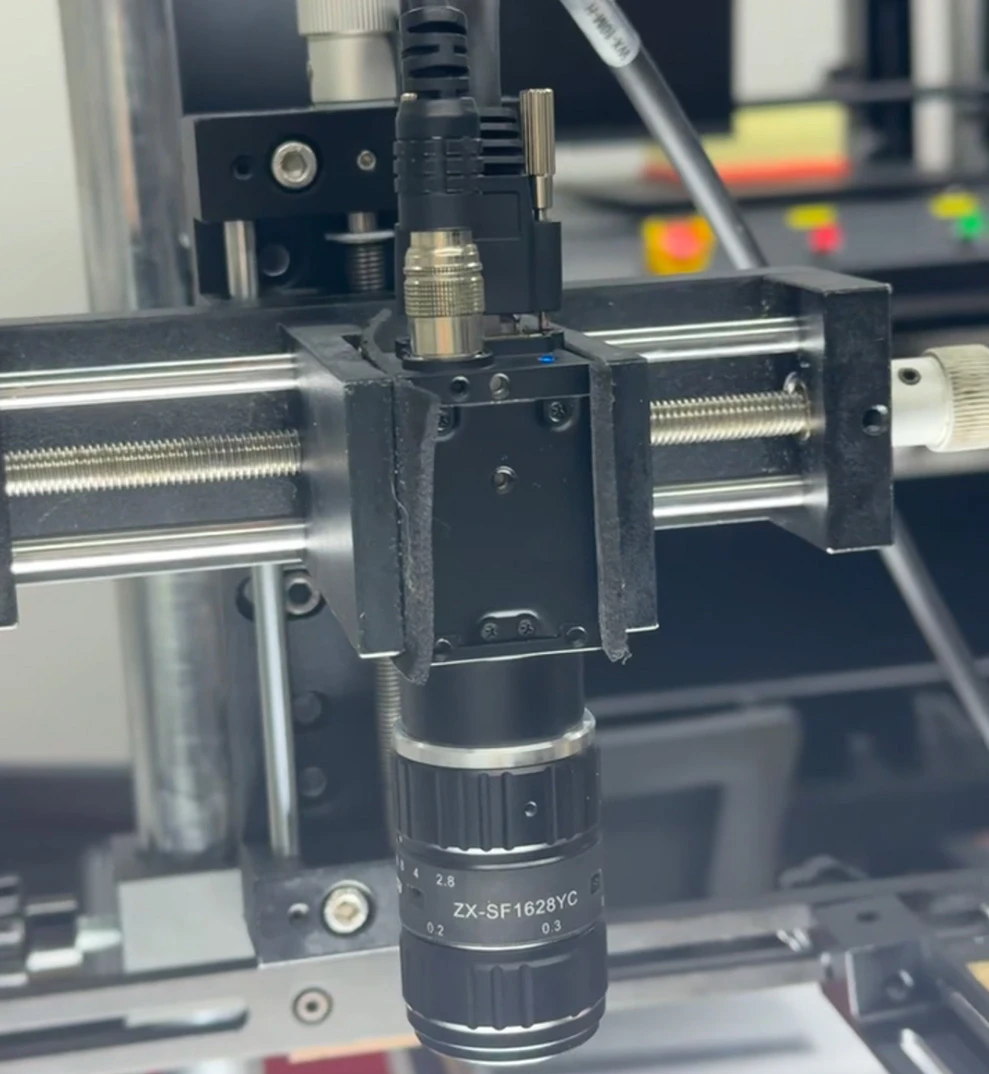
What is industrial camera noise and signal-to-noise ratio?
In industrial visual inspection, noise refers to invalid signals in an image that do not originate from the actual object being imaged. It is often caused by factors such as lighting fluctuations, electromagnetic interference, temperature changes, or sensor characteristics, and can directly impact image clarity and recognition accuracy. In complex production environments, noise control is a significant challenge.
The signal-to-noise ratio (SNR) is a key metric for measuring image quality, representing the ratio of effective signal to noise in an image (i.e., the ratio of the mean grayscale value of the effective signal to the root mean square value of the noise). A higher SNR indicates a purer image and greater detail reproduction. Conversely, a high proportion of noise can result in grainy or blurry images, impacting algorithm recognition performance.
High-performance industrial cameras typically achieve significantly improved SNR through optimized circuit design, improved sensor structure, and the application of intelligent noise reduction algorithms, resulting in more stable and clearer imaging. This is particularly critical for vision tasks requiring extremely high image quality, such as color recognition, surface defect detection, and dimensional measurement.
How do you view the dynamic range of industrial cameras?
Dynamic range refers to a camera's ability to simultaneously detect and restore details in both the brightest and darkest areas of an environment. In other words, it reflects the camera's latitude in capturing image gradations under varying light intensities-from brightly lit reflective areas to shadowy details in low-light conditions. The wider the dynamic range, the more complete the image information.
In actual industrial inspection environments, lighting conditions are often extremely complex, such as strong reflections on metal surfaces and dark details in equipment shadows. Insufficient dynamic range can easily lead to overexposure or underexposure, resulting in loss of image information and impacting the accuracy of defect detection and dimensional measurement. Industrial cameras with wide dynamic range (HDR) can preserve complete details in environments with both bright and dark areas, providing more stable and reliable data input for vision algorithms.
Dynamic range is also closely related to exposure control.
In manual exposure mode, if the ISO is not adjusted as light levels decrease, the dynamic range decreases. Raising the ISO to compensate for brightness can further reduce the dynamic range due to overexposure of highlights. Therefore, industrial cameras often feature automatic exposure and gain control to dynamically adjust parameters in varying lighting conditions, ensuring images are always within the optimal brightness range.
It's worth noting that even high-performance industrial cameras still struggle to match the dynamic range of the human eye. In reality, we perceive both the brightness of the sky and the details beneath shadows, while photos taken with ordinary cameras often lose some of these layers. This is precisely the purpose of high dynamic range (HDR) technology-through sensor optimization and algorithm fusion, it allows the "eyes" of machines to gradually approach the expressiveness of human vision.
Why do industrial cameras experience frame loss?
In machine vision inspection systems, common input and output interfaces for industrial cameras include Camera Link, USB 2.0, USB 3.0, and GigE (Ethernet). Each interface type offers advantages in terms of transmission speed, transmission distance, and system compatibility, providing diverse configuration options for vision systems.
In practice, some engineers believe that industrial cameras using USB interfaces are more prone to frame drop. In reality, frame drop isn't caused by the interface type itself, but rather by improper camera hardware design or driver architecture. When data channel design is poor, buffer memory is insufficient, or transmission synchronization mechanisms are imperfect, image data cannot be processed in a timely manner, leading to conflicts between new and old image frames and resulting in frame drop. To avoid these issues, system-level optimization and precise design are required for driver, buffer management, and data transmission links.
In high-speed production lines or dynamic inspection scenarios, image acquisition speed directly impacts inspection cycle time and overall efficiency. High-frame-rate industrial cameras can capture more images per unit time, providing more accurate inspection data for high-speed moving targets. At the same time, in conjunction with high-speed data interfaces such as USB 3.0, GigE, and 10GigE, it can not only achieve stable transmission with large bandwidth, but also effectively reduce delays and frame drops, ensuring the real-time and reliability of the visual system.
Industrial cameras are the core of machine vision systems. Every performance parameter-from resolution, frame rate, signal-to-noise ratio, to dynamic range and interface bandwidth-directly impacts the accuracy and stability of the inspection system. Only when these performance parameters are properly balanced and matched can truly high-precision visual inspection and stable output be achieved.
With the continuous advancement of smart manufacturing, AI-powered visual recognition, and automated inspection, industrial cameras are entering an era of higher resolution, faster transmission speeds, and more intelligent algorithm integration. In the future, they will no longer be just "imaging devices" but the core engine driving smart factories and quality control upgrades. Amidst the wave of industrial digital transformation, high-performance industrial cameras will continue to empower more industry scenarios, helping companies achieve more precise inspections, more efficient production, and smarter management.


