

In the context of today's consumers' higher requirements for food safety, packaging integrity and production efficiency, the food packaging industry is in a critical period of accelerating the transformation from "automation" to "intelligence". One of the most representative core technologies is the machine vision system. From whether the beverage bottle cap is tightened, to whether the packaging bag is sealed, to whether the label content is consistent and accurate, and whether the barcode is clear, more and more packaging companies choose to introduce machine vision solutions to achieve intelligent detection and quality control of the production process. Below we will introduce you in depth the practical application value of machine vision in the video packaging industry.
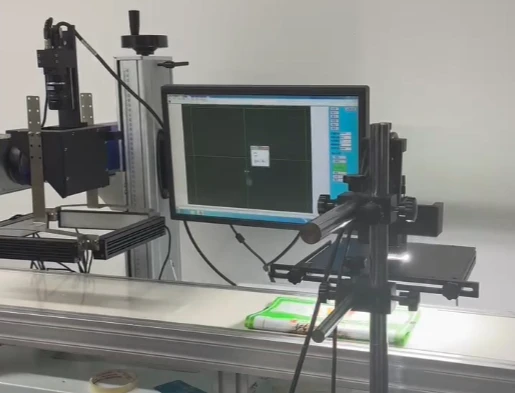
As the "first line of defense for food safety", the quality of food packaging is directly related to consumer health and brand reputation. However, the traditional manual inspection method has obvious shortcomings in the face of large-scale, high-beat, and multi-category packaging processes:
Inefficiency: Manual inspection is slow and difficult to match high-speed packaging production lines;
Poor consistency: Long-term work is prone to fatigue, resulting in missed inspections or misdetections;
High cost: A large amount of manpower is required for repetitive work, increasing labor costs;
Untraceable: Lack of image records and data analysis makes it difficult to track products and improve quality.
Today, as food safety is increasingly receiving regulatory attention, companies are in urgent need of a stable, fast, intelligent and traceable detection method, and machine vision technology just meets this rigid demand.
Why has the advantage of machine vision become the industry's "preferred option"?
Based on industrial cameras, light sources, image acquisition cards and intelligent algorithms, machine vision systems can perform real-time image acquisition and analysis of products, and automatically determine whether the product appearance meets quality standards.
Compared with traditional detection methods, machine vision performs well in the following aspects:
1. High-speed detection, adapting to high-beat production
The visual system can work synchronously with the packaging line, inspecting hundreds of products per minute, ensuring zero delay and zero backlog.
2. High-precision recognition, reducing defect outflow rate
Through AI image algorithms and deep learning models, the system can accurately identify minor defects, such as broken bottle mouths, bubbling seals, skewed labels, etc., with a detection accuracy of more than 99%.
3. Automatic classification and rejection
The detection results are fed back to the execution system in real time, and unqualified products are automatically classified and rejected to prevent defective products from entering the market.
4. Data recording and tracing
The system can store the inspection images and results of each product, support subsequent quality tracing and statistical analysis, and help enterprises continuously optimize processes and production strategies.
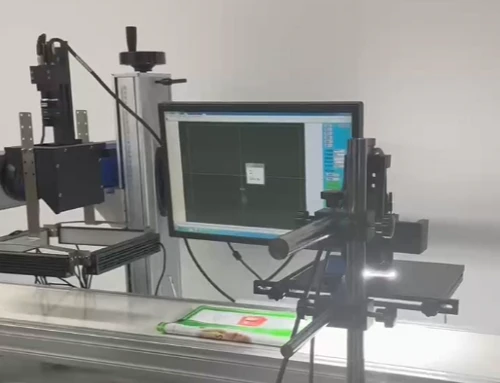
Full coverage of typical application scenarios
Machine vision technology is widely used in the food packaging industry, covering multiple production nodes, including:
Bottle cap detection: determine whether it is tightened, whether it is missing, or whether it is wrong;
Seal detection: detect whether the plastic bag and aluminum foil seal are complete, wrinkled or virtual;
Label detection: identify whether the label content is correct, whether it is crooked, wrongly pasted, or missing;
Character/date/barcode recognition: OCR recognizes production date, batch number, QR code clarity, etc.;
Counting and missing parts detection: ensure that the number of products in the package is correct, without missing or mixed;
Foreign matter detection: detect whether there are foreign matter, oil stains, pollution, etc. on the surface or content of the package.
These functions can be flexibly configured according to the customer's product process, truly realizing "customization + modular" deployment, and quickly responding to production line changes.
Future trends: AI + machine vision, promoting the intelligent upgrade of the industry
With the development of AI technology, more and more food companies have begun to pay attention to the "deep learning" visual inspection system. It can automatically extract key features by training a large number of defect samples, deal with complex, deformed, and blurred defect problems, and have stronger reading and recognition capabilities.
At the same time, combined with edge computing, cloud platforms, industrial Internet of Things and other technologies, it leads machine vision to the field of technological vision with intelligent equipment, data visualization, and system integration.
Quality control in the food packaging industry is no longer just a compliance issue, but also the coachine vision technology is changing from "auxiliary tools" to "core vision", building a solid qrnerstone for products to gain trust between the market and consumers. The application of muality defense line for enterprises. If you are also looking for efficient, intelligent, and stable visual inspection solutions, please contact our partners at Zhixiang Shijue. We will tailor a dedicated visual system for you to help enterprises achieve production quality efficiency and move towards intelligent manufacturing!


