

As keywords like "smart manufacturing" gradually become a major driving force for industrial upgrading, visual inspection technology is increasingly being integrated into various production scenarios. The integration of deep learning and AI is creating new intelligent vision systems that are reshaping factory quality management models. Is your production line ready for the upgrade?
Why are more and more factories choosing visual inspection?
In traditional manufacturing, quality inspection is primarily performed manually, which is subject to high error rates, unstable efficiency, and high labor costs. Machine vision systems, on the other hand, utilize industrial cameras, optical lenses, and image algorithms to automatically perform tasks such as object recognition, positioning, defect detection, and dimensional measurement. They offer the following advantages:
High precision: Inspection errors are controlled to the micron level, surpassing manual inspection performance.
High speed: Millisecond-level processing response meets the demands of high-speed production lines.
Stable operation throughout the day: Avoiding false detections and missed inspections caused by human fatigue.
Traceable data: Inspection results can be traced and provide a basis for process optimization.
What scenarios can visual inspection be used in?
Visual inspection systems are suitable for nearly all industrial production processes requiring high repeatability and precision, including but not limited to:
Electronics manufacturing: FPC solder joint inspection, missing component identification, and screw installation integrity
Automotive manufacturing: component assembly verification, surface scratch detection, and dimensional measurement
Lithium-ion battery and new energy: electrode defects, solder joint inspection, and battery cell size identification
Packaging industry: label optical character recognition, seal inspection, and foreign object detection
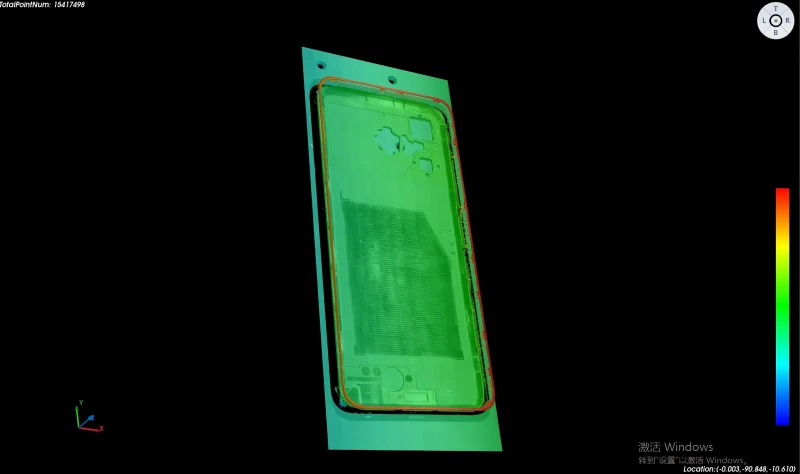
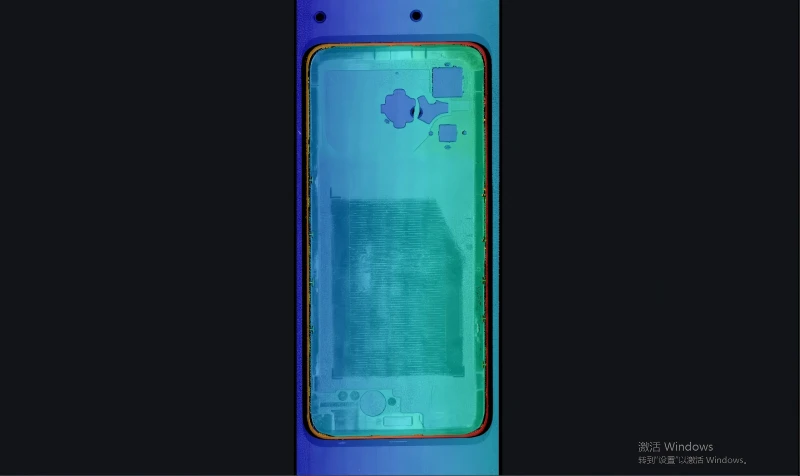
In particular, with technological innovations, the integration of 3D cameras, smart cameras, and AI has significantly improved the effectiveness of solutions for complex product shapes and structures, as well as inspections in environments with limited space.
Machine vision + AI: Intelligent Vision
Traditional machine vision relies on defined functional rules, which often lead to missed inspections when dealing with variability in products or those with complex backgrounds. Modern AI deep learning vision systems, trained on large numbers of image samples to automatically extract features, can more quickly adapt to environmental changes and optimize inspection defect rates. Here are a few examples:
Detecting minor scratches on phone cases
Determining whether automotive welds are partially welded
Identifying minor defects such as burrs and indentations on the edges of lithium electrode sheets
Is your factory ready? Let AI visual inspection drive the transformation to an "intelligent assistant."
The use of visual inspection is no longer exclusive to "high-end manufacturing" but a standard feature for every company striving for stable quality and intelligent efficiency. If your factory still relies on manual inspection, which suffers from high false positive rates and low inspection efficiency, or if you're building a smart production line but struggle with inadequate inspection support, it's time to reevaluate your quality control system. It's time to understand how visual inspection can truly empower your production processes.
We have successfully served clients in numerous industries, including 3C, automotive, lithium-ion batteries, and medical, achieving stable upgrades in production line quality inspection.
Contact us to make "intelligent" inspection a reality.
Want to request a prototype test? Want to learn about adaptation solutions?
Contact US directly for a free, one-on-one visual application evaluation.


