

As the core of a machine vision system, the performance of an Industrial Camera depends not only on the sensor and optical system but also closely on the choice of data transmission interface. Common interfaces include USB, GigE, and Camera Link, each with its own advantages in terms of transmission rate, bandwidth usage, cable length, and system compatibility.
USB industrial cameras are characterized by plug-and-play functionality, simple wiring, and high cost-effectiveness, making them suitable for medium- to high-speed inspection scenarios. GigE industrial cameras offer long transmission distances and strong anti-interference capabilities, and are commonly used in large production lines and multi-camera systems. Camera Link cameras are known for their high speed and stability, making them suitable for high-resolution, high-frame-rate precision inspection applications.
1. Optical Components
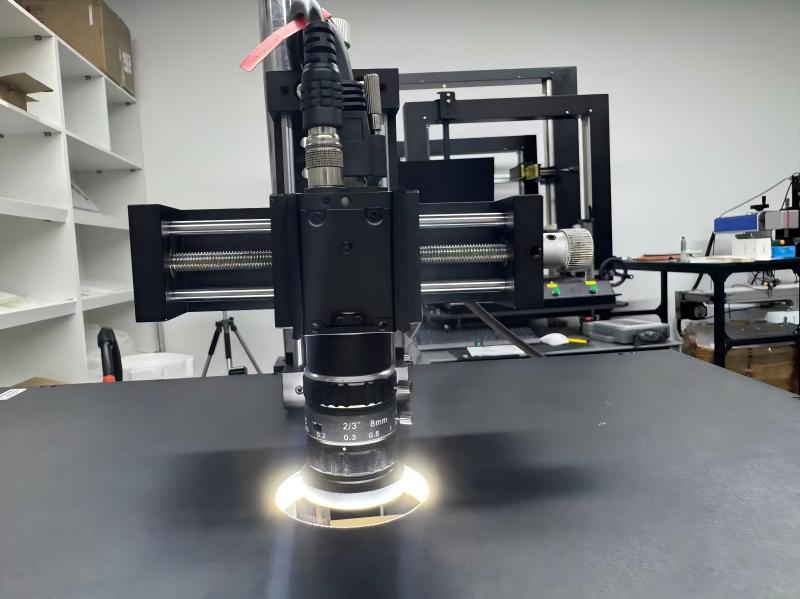
The optical components of industrial cameras are primarily based on CCD or CMOS image sensors. The area of their optically sensitive region and pixel size directly determine the imaging resolution and light sensitivity. For products with integrated optical systems and camera designs, lens parameters are typically precisely matched to sensor characteristics at the factory to ensure optimal image quality.
In professional or specialized applications, engineers often need to change different types of lenses to suit specific imaging requirements. For example:
Microscope lenses: used for microscopic size inspection and chip surface analysis;
Endoscopic lenses: suitable for imaging in confined spaces or inside equipment;
Telephoto lenses: suitable for long-distance monitoring and inspection of large equipment.
Common lens interfaces include C-mount and CS-mount. Some manufacturers also offer dedicated interface designs to achieve high-precision matching with specific sensors or imaging systems. Appropriate optical selection not only improves image clarity but also significantly enhances inspection accuracy and system stability.
2. Signal Acquisition Section:
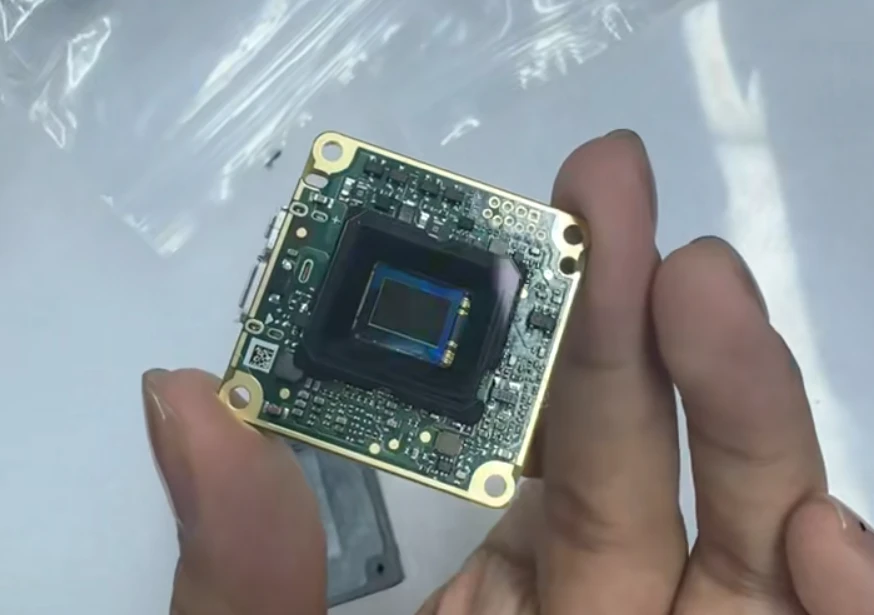
The core function of industrial cameras relies on the electrical signal processing of external information, and the signal acquisition module is a crucial component. This module is primarily responsible for converting incident light signals into processable electrical signals.
The photoelectric conversion process is completed by a CCD or CMOS image sensor: After being focused by the lens, the incident light illuminates the photosensitive surface of the sensor. The sensor converts the light intensity information into a corresponding charge signal, which is then amplified and converted from analog to digital to form a digital signal for subsequent image processing and analysis.
In some systems with multimodal acquisition capabilities, the camera can also acquire acoustic signals through external microphones, combining sound and light information for more complex detection and monitoring scenarios, thereby improving the system's environmental perception capabilities and data fusion accuracy.
3. Digital Processing:
Image digitization is the core step in industrial camera signal processing, and its process can be divided into two stages: photoelectric conversion and analog-to-digital conversion (A/D conversion).
First, the CCD or CMOS image sensor divides the imaging area into countless pixel units. Each pixel generates a corresponding charge signal based on the number of photons received: the higher the light intensity, the higher the output voltage; the weaker the light, the lower the voltage. The output electrical signal at this stage is still an analog signal.
Next, the signal is converted into a digital signal by an analog-to-digital converter (ADC), thus forming a raw digital image that can be recognized by a computer or processor, providing the basic data for subsequent image analysis, feature extraction, and recognition algorithms.
In systems with voice acquisition capabilities, the microphone also converts the sound signal into a voltage signal, which is then converted into digitized audio data through A/D conversion, enabling multimodal data input and supporting complex scene monitoring and intelligent analysis.
4. Signal Enhancement:
Image signal enhancement is a crucial step in the digital imaging process of industrial cameras, aiming to improve image sharpness, color reproduction, and overall visual quality.
In color industrial cameras, the color information of the image is generated by a color filter array (CFA). Filters are typically overlaid on a CCD or CMOS sensor, and each pixel can only receive one of the three colors of light: red (R), green (G), or blue (B). The most common arrangement is a Bayer filter array, which, through a specific RGGB distribution pattern, enables the sensor to perceive complete color information.
After acquiring the raw image data, the signal enhancement module optimizes the image using algorithms such as demosaicing, white balance, gamma correction, and sharpening, ultimately generating a high-quality image that meets visual or inspection requirements.
For systems with audio input capabilities, the audio signal also undergoes digital signal processing steps such as noise suppression, gain adjustment, and dynamic range compression to ensure clear and distinct sound.
5. Interface:
The interface module is a crucial bridge for data transmission and control communication between industrial cameras and external devices, and it's also one of the key differentiators between various types of industrial cameras.
Common industrial camera interfaces include USB 3.0, GigE, Camera Link, CoaXPress, and 10GigE. Different interfaces have their own characteristics in terms of transmission bandwidth, distance, real-time performance, and system compatibility.
For example, the USB 3.0 interface offers advantages such as plug-and-play functionality, high transmission speed, and low cost, making it suitable for short-range, high-frame-rate applications. The GigE interface, on the other hand, supports long-distance transmission and multi-device networking, making it suitable for scenarios such as industrial production lines where multiple cameras need to acquire data simultaneously.
Choosing the right interface type not only affects the stability and efficiency of image transmission but also determines the compatibility and scalability of the camera with the entire vision system.
6. Control:
The control module coordinates and manages the various functional modules of the camera, ensuring efficient collaboration between image acquisition, signal processing, and data transmission.
Users can control and configure the camera in several ways:
Local Control:Basic operations such as power on/off and exposure mode switching are achieved via physical buttons or DIP switches on the camera.
Software Control:Parameters, including exposure time, gain, frame rate, and trigger mode, can be remotely adjusted on a computer using dedicated application software or SDK.
Comprehensive Control:Combining hardware and software enables more flexible hybrid control schemes, such as precise synchronized shooting through external trigger signals and software commands.
A well-designed control method can effectively improve the system's automation level and operational stability, meeting the application needs of different industrial scenarios.
As a core component of machine vision systems, the performance of industrial cameras is determined by six major modules: optics, signal acquisition, digitization, signal enhancement, interface, and control. Each module plays a crucial role in the imaging process: from light entering the lens, being captured by the image sensor and converted into a digital signal, to image optimization, data transmission, and system control, each step is interconnected and works collaboratively.
Through rational module design and technological optimization, industrial cameras can provide stable and reliable imaging quality in high-speed, high-precision detection and recognition tasks, providing strong technical support for fields such as intelligent manufacturing, automated inspection, and vision guidance.


